
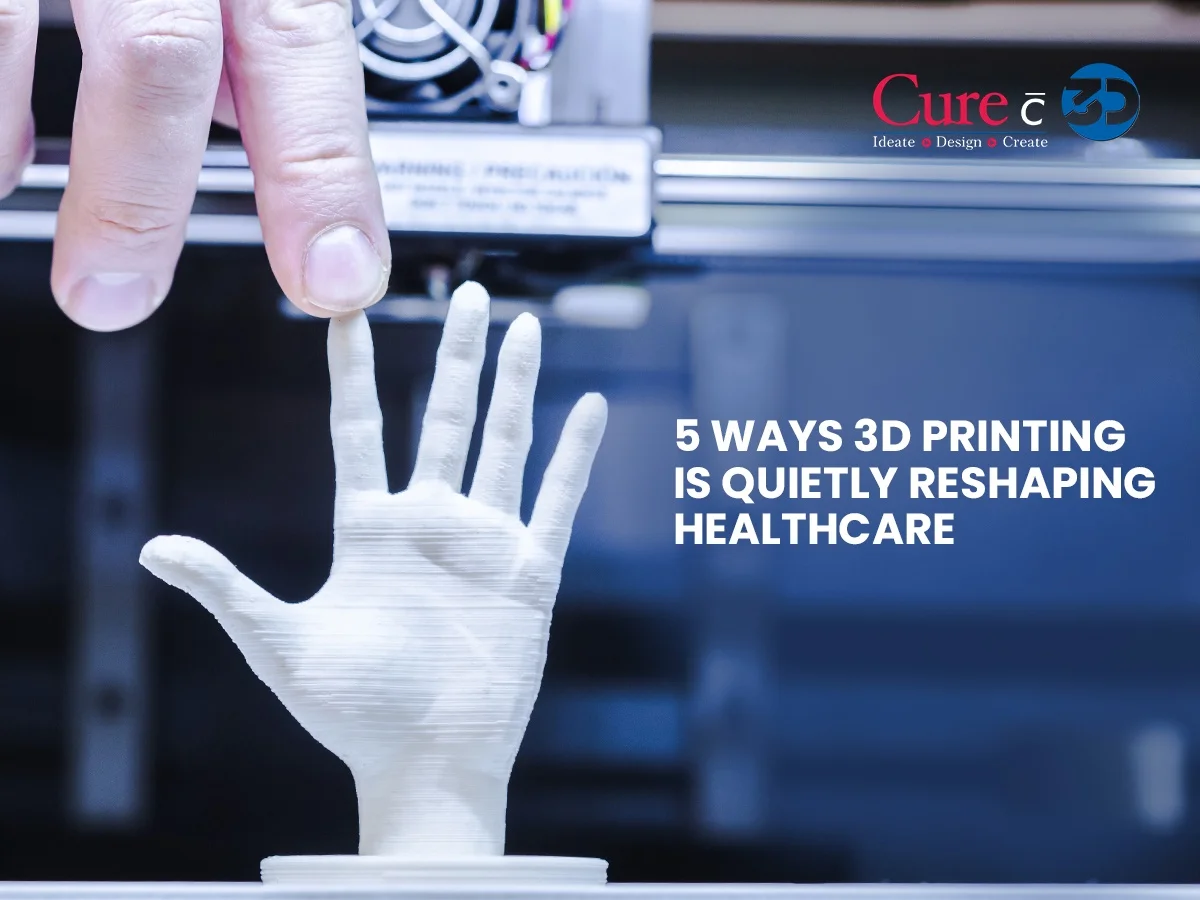
How 3D Printing is Quietly Transforming Modern Healthcare
Introduction
Not every medical revolution arrives with dramatic headlines or overnight disruption. Some innovations slowly integrate into daily healthcare practices and eventually become impossible to ignore. That is exactly what is happening with 3D printing in healthcare.
Over the last decade, medical professionals around the world have started using 3D printing technologies to improve surgical planning, personalize treatment, and enhance patient outcomes. What once existed mainly in research laboratories is now actively supporting surgeons, hospitals, and healthcare providers in real clinical environments.
Today, 3D printing is helping doctors prepare for complex procedures with greater confidence. It supports the creation of patient-specific implants, customized surgical guides, realistic anatomical models, and even advanced tissue engineering research.
The healthcare industry is moving toward precision medicine, where treatments are designed according to each patient’s unique anatomy and condition. Technologies such as Virtual Surgery Planning and Custom 3D Printed Surgical Guides are playing an increasingly important role in this transformation.
At Curewith3D, advanced healthcare technologies are helping medical professionals deliver more personalized, accurate, and efficient surgical care through modern 3D printing solutions.
The Growing Role of 3D Printing in Healthcare
Healthcare has always depended on innovation. From advanced imaging systems to robotic-assisted surgery, technology continues to improve the way patients are diagnosed and treated.
3D printing adds another powerful layer to this progress by allowing healthcare providers to physically create customized medical solutions directly from digital imaging data.
Unlike traditional manufacturing, which often relies on standardized production, 3D printing allows doctors and engineers to develop patient-specific models and devices with exceptional precision.
This technology is now being used in:
- Orthopedic surgery
- Maxillofacial reconstruction
- Neurosurgery
- Dental implant procedures
- Oncology treatment planning
- Prosthetic development
- Medical education and training
As healthcare systems continue to adopt digital technologies, 3D printing is becoming an essential part of modern medical practice.
1. 3D Printed Anatomical Models Are Improving Surgical Planning
One of the most impactful uses of 3D printing in healthcare is the creation of anatomical models for surgical planning.
Traditionally, surgeons relied on CT scans, MRI scans, and X-rays to study patient anatomy before surgery. While these imaging tools remain essential, they only provide two-dimensional visualization on screens.
With 3D printed anatomical models, surgeons can now hold an exact replica of the patient’s anatomy in their hands before entering the operating room.
These models help surgeons:
- Understand complex anatomy more clearly
- Plan difficult surgical procedures
- Identify potential complications early
- Improve communication among surgical teams
- Increase confidence before surgery
This is particularly valuable in complicated procedures involving:
- Brain tumors
- Spinal deformities
- Facial reconstruction
- Complex fractures
- Heart abnormalities
Many hospitals are now integrating 3D Surgical Models into their preoperative workflows to improve accuracy and patient outcomes.
You can also explore: Before the First Cut: Why Virtual Surgery Planning Matters More Than Ever
2. Customized Surgical Guides Are Enhancing Precision
In surgery, even small inaccuracies can affect long-term patient outcomes. That is why precision is critical, especially during orthopedic, dental, and reconstructive procedures.
3D printed surgical guides are helping solve this challenge by providing surgeons with highly accurate, patient-specific tools.
These guides are designed using the patient’s CT or MRI data and manufactured specifically for the planned procedure. During surgery, the guide fits directly onto the patient’s anatomy and assists the surgeon in performing highly precise cuts, drilling, or implant positioning.
The use of Custom 3D Printed Surgical Guides helps improve:
- Surgical accuracy
- Implant alignment
- Procedure efficiency
- Recovery outcomes
- Consistency in complex surgeries
These guides are commonly used in:
Orthopedic Reconstruction
Complex bone reconstruction procedures often require precise alignment and implant positioning. Surgical guides reduce uncertainty and improve procedural accuracy.
Dental Implant Surgery
Dental surgeons use customized guides to ensure accurate implant placement and reduce procedural complications.
Tumor Resection Procedures
In oncology surgeries, surgical guides help define precise cutting margins while preserving healthy tissues.
As hospitals increasingly adopt personalized surgical technologies, patient-specific surgical guides are becoming a standard component of advanced surgical care.
3. Personalized Implants Are Improving Patient Outcomes
One of the biggest limitations of traditional implants is that they are usually manufactured in standard sizes. However, every patient has unique anatomy.
A poorly fitted implant can sometimes lead to:
- Discomfort
- Reduced mobility
- Implant instability
- Longer recovery times
- Surgical complications
This is where 3D printing is making a major difference.
Using patient imaging data, manufacturers can now create implants specifically designed for an individual patient’s anatomy. These implants offer improved fit, better integration, and enhanced long-term functionality.
Healthcare providers using Patient Specific Implants are helping patients receive more personalized treatment solutions.
Applications include:
- Cranial implants
- Jaw reconstruction implants
- Orthopedic trauma implants
- Spinal cages
- Facial reconstruction devices
Because these implants are customized to match the patient’s anatomy, surgeries can often become more efficient and recovery outcomes may improve significantly.
You can also read: The Future of Orthopedics with Patient-Specific Implants
4. 3D Printing Is Supporting Better Rehabilitation and Prosthetics
Beyond surgical applications, 3D printing is also helping improve rehabilitation and assistive healthcare solutions.
Traditional prosthetics and orthotic devices often require lengthy production times and may not always provide optimal comfort or fit.
With 3D printing, healthcare providers can develop customized rehabilitation devices tailored specifically to the patient’s needs.
These include:
- Prosthetic limbs
- Orthotic braces
- Splints
- Protective supports
- Sports rehabilitation devices
The benefits of customized rehabilitation devices include:
- Better comfort
- Reduced weight
- Faster production
- Improved mobility
- Personalized fitting
Children and patients with changing physical needs especially benefit from this level of customization because devices can be modified and reproduced more efficiently.
3D printing is also improving accessibility by helping reduce the cost and manufacturing time associated with traditional prosthetic production methods.
5. Bioprinting Is Opening New Possibilities in Medicine
One of the most exciting areas of healthcare innovation is bioprinting.
Bioprinting involves using specialized bio-inks made from living cells to create tissue-like structures that mimic human anatomy.
Although fully functional printed organs are still under development, researchers have already made significant progress in creating:
- Skin tissue
- Cartilage structures
- Vascular networks
- Liver tissue models
- Kidney tissue samples
These developments may eventually help solve major healthcare challenges such as organ shortages and tissue regeneration.
Bioprinting also supports:
- Drug testing research
- Regenerative medicine
- Tissue engineering
- Personalized treatment development
While this technology is still evolving, it represents one of the most promising future applications of 3D printing in healthcare.
Hospitals Are Becoming Digital Manufacturing Centers
Many hospitals are now developing in-house 3D printing laboratories to support surgical planning and medical device production.
Instead of relying entirely on external manufacturing suppliers, hospitals can produce customized tools and models internally.
This shift provides several advantages:
Faster Response Times
Hospitals can quickly produce urgent surgical tools and models when needed.
Improved Collaboration
Surgeons, radiologists, and biomedical engineers can work together more efficiently during treatment planning.
Better Cost Management
In-house production may reduce manufacturing and logistics expenses over time.
Greater Innovation
Healthcare teams can rapidly test and improve new ideas for patient care solutions.
This growing integration of digital manufacturing within healthcare institutions highlights how deeply 3D printing is becoming embedded in modern medical systems.
The Role of Virtual Surgery Planning in Modern Healthcare
Virtual planning technologies are becoming increasingly important alongside 3D printing applications.
With Virtual Surgery Planning, surgeons can digitally simulate procedures before surgery takes place.
This allows them to:
- Analyze patient anatomy in detail
- Practice complex procedures
- Optimize implant placement
- Reduce surgical uncertainty
- Improve overall planning accuracy
Combined with patient-specific models and customized surgical guides, virtual planning creates a highly advanced and personalized surgical workflow.
You can also explore: How Virtual Surgery Planning Improves Patient Safety and Recovery
Challenges and Future Opportunities
Although healthcare 3D printing offers enormous potential, some challenges still exist.
High Equipment Costs
Advanced printers and medical-grade materials can require significant investment.
Technical Expertise
Successful implementation often requires collaboration between surgeons, engineers, and imaging specialists.
Regulatory Standards
Medical devices and implants must meet strict quality and safety regulations.
Despite these challenges, the future remains extremely promising.
As technologies become more affordable and accessible, healthcare providers across India and globally are expected to expand their adoption of 3D printing solutions significantly.
Conclusion
3D printing is quietly transforming healthcare in ways that are becoming increasingly difficult to ignore. From anatomical models and surgical guides to patient-specific implants and tissue engineering research, this technology is improving surgical precision, patient care, and treatment personalization across multiple medical specialties.
What makes this transformation especially important is that it is not limited to futuristic research labs anymore. Hospitals, clinics, and surgical centers are already using these technologies to improve real-world patient outcomes every day.
As healthcare continues to move toward personalized and precision-based treatment, technologies such as 3D Surgical Models, Patient Specific Implants, and Custom 3D Printed Surgical Guides will continue shaping the future of medicine.
At Curewith3D, advanced 3D healthcare technologies are supporting surgeons and healthcare providers in delivering safer, smarter, and more personalized treatment solutions for the future of patient care.